The ROI of BIM: How to Calculate Value Beyond the 3D Model
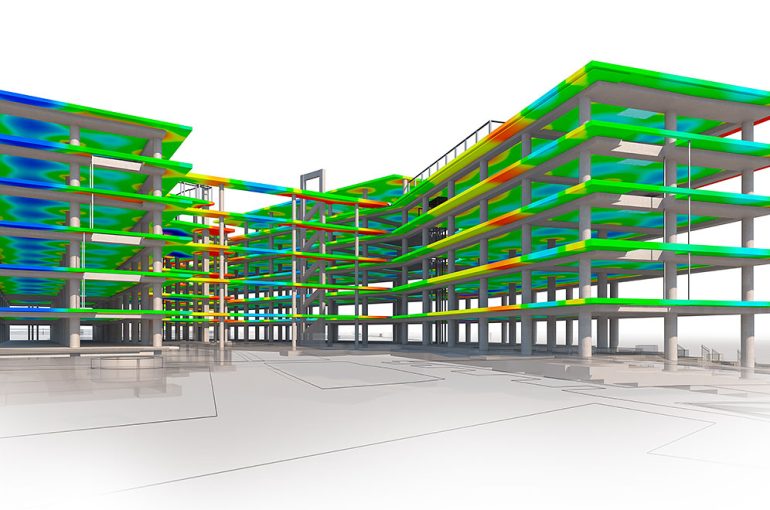
In 2026, the conversation around BIM has evolved.
For most AEC firms, the question is no longer “Should we use BIM?”
It’s now: “What measurable return are we getting from our BIM investment?”
Software licenses, training, coordination meetings, cloud collaboration platforms — they all cost money. But when implemented strategically, Building Information Modeling delivers measurable financial returns that extend far beyond 3D visualization.
The true ROI of BIM lies in data-driven decision-making, construction risk mitigation, schedule optimization, and lifecycle cost savings.
Here’s how to calculate, communicate, and defend the financial value of BIM to project owners, directors, and stakeholders in 2026.
Moving Beyond 3D: Where the Real BIM ROI Lives
Most firms begin their BIM journey with 3D modeling for visualization and coordination. While that alone improves spatial clarity, it represents only the tip of the iceberg.
The real value appears when firms leverage:
- 4D BIM (Time Integration)
- 5D BIM (Cost Integration)
- Data-rich handover models
- Digital twin workflows
BIM becomes less about drawings — and more about predictive intelligence.
4D BIM Scheduling: Time Is Money
4D BIM links your construction schedule directly to model elements, allowing teams to simulate the build sequence before breaking ground.
Instead of relying solely on Gantt charts, project managers can visually analyze:
- Crane placement conflicts
- Trade stacking issues
- Access sequencing problems
- Temporary works planning
- Site logistics bottlenecks
Platforms like Autodesk Navisworks and Autodesk Construction Cloud enable real-time schedule visualization tied to model data.
The ROI Factor
A conservative 10% reduction in construction schedule can translate into:
- Lower site overhead costs
- Reduced equipment rental duration
- Fewer extended supervision fees
- Lower general conditions expenses
On large commercial projects, that can mean hundreds of thousands — or even millions — in savings.
Key Performance Metric
Measure:
- Planned vs. Actual schedule deviations
- Days saved through sequencing optimization
- Reduction in idle labor time
When stakeholders see timeline compression backed by simulation data, BIM’s financial value becomes undeniable.
5D BIM Estimating: Real-Time Cost Intelligence
5D BIM connects model elements directly to cost databases. Every wall, slab, door, and pipe carries quantifiable data.
With automated quantity take-offs (QTO), firms eliminate manual spreadsheet estimation and significantly reduce human error.
When integrated with tools like Autodesk Revit and cost platforms inside Autodesk Construction Cloud, updates happen instantly.
The ROI Factor
When design changes occur:
- Quantities update automatically
- Cost estimates refresh immediately
- Budget impact becomes visible in real time
This prevents:
- Budget creep
- Late-stage cost surprises
- Underestimated procurement needs
Instead of reacting to overruns, teams can proactively adjust.
Key Performance Metric
Track:
- Reduction in Quantity Variance between design and procurement
- Time saved in estimation cycles
- Accuracy improvement in cost forecasting
Even a 3–5% improvement in cost prediction accuracy can significantly protect profit margins.
Top 3 BIM Benefits Driving Financial ROI in 2026
Construction Cost Savings Through Clash Detection
The fastest, most visible ROI comes from pre-construction coordination.
Using clash detection tools inside Autodesk Navisworks, teams identify conflicts before construction begins.
Example:
- Fixing a pipe clash in the BIM model = ~$20 in coordination time
- Fixing the same clash on site = $2,000–$10,000 in delays, material waste, and labor
Multiply that by dozens — or hundreds — of clashes.
Simple ROI Formula
(Number of Clashes Resolved in BIM × Average Field Rework Cost) – BIM Coordination Labor Cost = Direct Financial ROI
For many projects, this calculation alone justifies BIM implementation.
Reduction in RFIs and Change Orders
BIM creates a Single Source of Truth.
When architects, structural engineers, MEP consultants, and contractors collaborate in a federated model:
- Documentation inconsistencies decrease
- Design intent is clearer
- Fewer ambiguities reach site
Studies consistently show 20–30% reduction in RFIs on coordinated BIM projects.
Fewer RFIs mean:
- Less administrative overhead
- Faster decision cycles
- Reduced change order disputes
That translates directly into cost stability.
Lifecycle Value & Digital Twins
In 2026, BIM ROI extends beyond construction into operations.
By delivering a COBie-compliant BIM model at handover, firms provide facility managers with structured asset data.
Using integrated workflows from Autodesk Revit to cloud platforms like Autodesk Construction Cloud, building owners gain:
- Immediate access to equipment specifications
- Warranty information
- Maintenance schedules
- Shut-off valve locations
- Asset tagging data
The ROI Factor in Operations
- Faster emergency response
- Reduced diagnostic time
- Improved preventative maintenance planning
- Lower lifecycle operational costs
When buildings operate more efficiently for decades, BIM’s ROI compounds long after project completion.
How to Calculate Your Firm’s BIM ROI (Practical Framework)
If you want to present BIM ROI to directors or project owners, use a measurable framework like this:
| Metric | How to Measure | Financial Impact |
| Rework Reduction | Compare Change Orders vs. non-BIM projects | Compare Change Orders vs. non-BIM projects |
| Schedule Speed | Gap between Projected Finish vs. Actual Finish | Gap between Projected Finish vs. Actual Finish |
| Drafting Efficiency | Hours spent on manual documentation vs. automated workflows | Hours spent on manual documentation vs. automated workflows |
| Waste Mitigation | Reduction in material over-ordering via 5D QTO | Reduction in material over-ordering via 5D QTO |
| RFI Reduction | Count of RFIs compared to historical projects | Reduced admin time |
Then convert hours and days into monetary value.
For example:
- 200 hours saved × average hourly billing rate
- 14 days saved × daily site overhead cost
- 25% fewer change orders × average change order value
Suddenly, BIM stops being a “software expense” — and becomes a profit protection system.
BIM as a Strategic Investment
In 2026, BIM is no longer just a modeling tool. It is a risk management framework, a cost forecasting engine, and a lifecycle intelligence platform.
Firms that treat BIM as a checkbox deliver drawings.
Firms that treat BIM as a financial strategy deliver measurable value.
When you present BIM ROI in terms of:
- Time saved
- Costs avoided
- Risks mitigated
- Operational efficiency gained
Stakeholders stop asking whether BIM is worth it.
They start asking how to scale it further.